Creating a 3D Art Installation for Actiu at Clerkenwell Design Week – Lorna Syson
Did you know that alongside designing wallpaper, fabrics and home accessories, I’ve also created large-scale, three-dimensional textile installations for commercial spaces and private clients around the world?
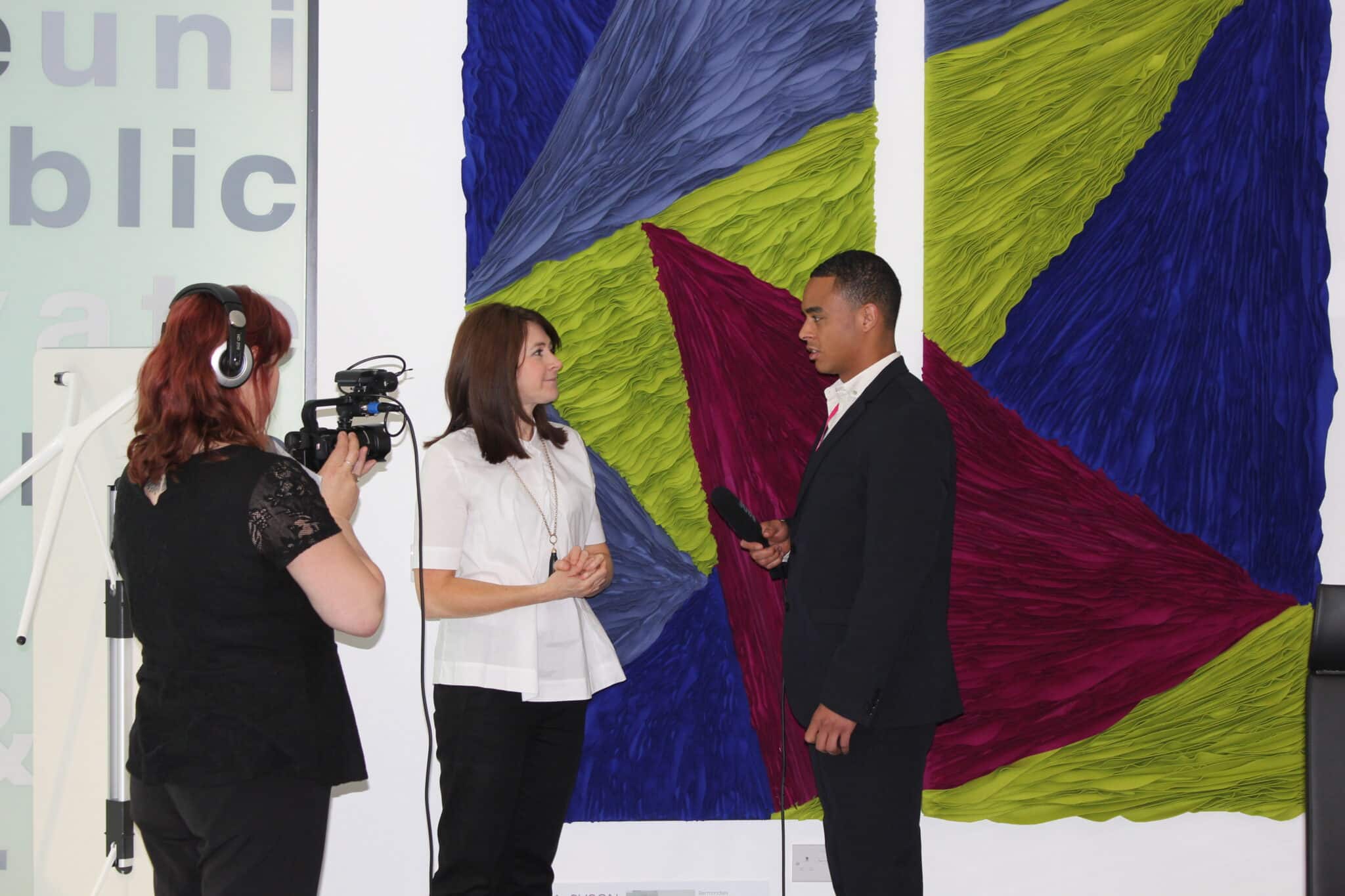
One of the projects I particularly enjoyed was creating an interactive 3D installation for Spanish furniture brand Actiu at its London showroom during Clerkenwell Design Week in 2013.
It was a wonderful opportunity to bring together my love of textiles, three-dimensional design, architecture and collaboration, creating something quite different from the surface patterns I’m best known for today.
And what made this project particularly interesting was that visitors were invited to get involved in creating artwork themselves inspired by Lorna’s piece.
Working With Actiu at Clerkenwell Design Week
Clerkenwell Design Week is one of London’s most exciting design events, bringing together architects, interior designers, furniture manufacturers, textile designers and creative businesses.
Clerkenwell itself has a fascinating history of craftsmanship, manufacturing and design, making it the perfect location for an event celebrating creativity.
For the 2013 event, I worked with Actiu, a Spanish manufacturer specialising in contemporary office furniture and workplace interiors, alongside ERA Screen.
The idea was to create a collaborative artwork inspired by Clerkenwell and the architecture that gives this part of London its distinctive character.
Throughout the event, we ran daily workshops where people could be inspired by the installation, creating individual elements inspired by some of Clerkenwell’s most recognisable landmarks.
These contributions came together to form a larger three-dimensional artwork celebrating the area’s architectural, artistic and cultural identity.
I loved the idea that everyone could contribute something different, with the final installation bringing all those individual creative responses together.
Taking Textile Design Beyond the Flat Surface
Although Lorna Syson is probably best known for nature-inspired wallpaper, fabrics and home accessories, I’ve always been interested in how textiles can be used in three dimensions.
My degree was in Textile Design at Loughborough University, and I’ve continued exploring different materials, techniques and ways of creating texture throughout my career.
There’s something fascinating about taking a material that is traditionally considered soft, flexible or flat and transforming it into something sculptural.
Rather than simply decorating a surface, three-dimensional textile design allows you to create structure, depth, movement and shadow.
A textile installation can completely change how a space feels.
It can draw your eye upwards, create an interesting focal point, soften an architectural interior or introduce a sense of movement.
For the Actiu project, I particularly enjoyed exploring how an installation could connect people with the surrounding architecture while encouraging them to participate in the design process.
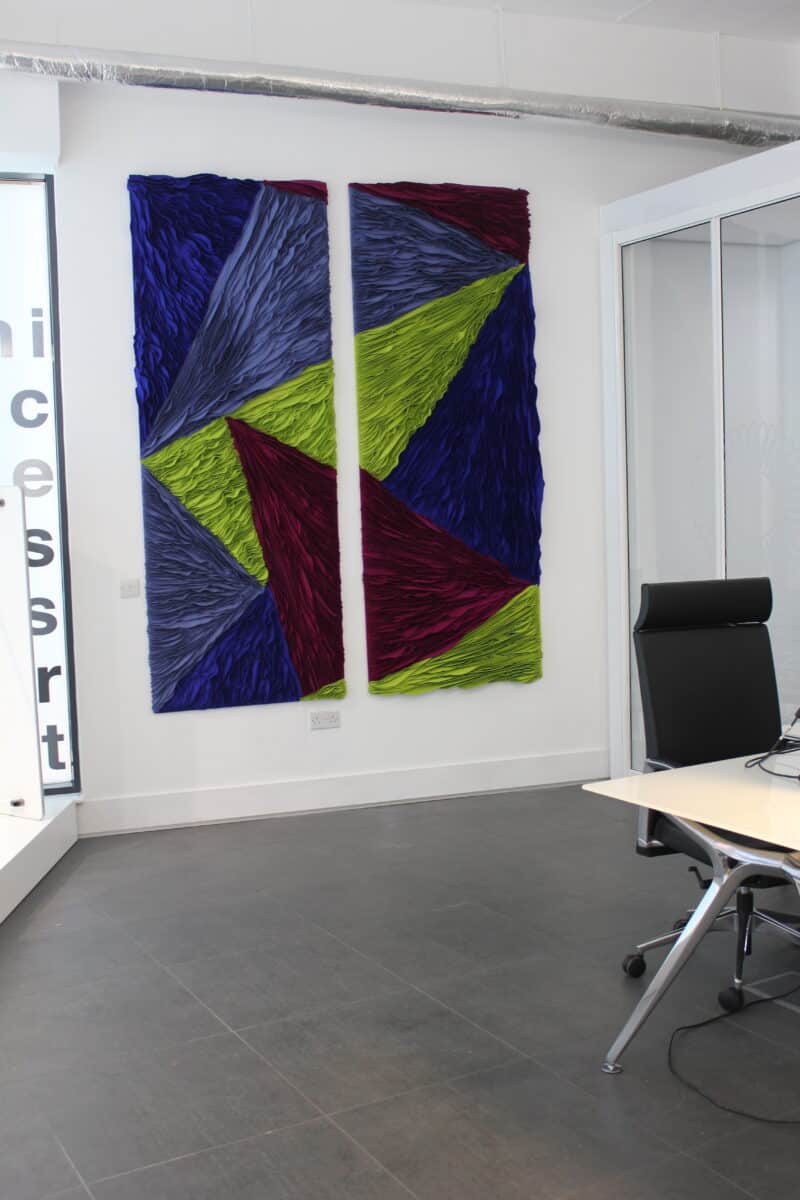
structural textiles piece by Lorna Syson at actui for clerkenwell design week
Structural by Lorna Syson – A Different Side of My Design Business
Over the years, I’ve developed a portfolio of bespoke structural textile installations under the name Structural by Lorna Syson.
This side of my work has allowed me to experiment with scale, materials and techniques in ways that are very different from creating repeat patterns for wallpaper and fabric.
Some of my previous projects have included:
A 30-Metre Three-Dimensional Textile Veil in West London
One of my larger commissions was a 30-metre-long three-dimensional textile veil created for the West London Buddhist Centre.
Working on this scale is a completely different challenge from designing a cushion or a length of fabric.
You have to consider not only the appearance of the finished piece but also how it interacts with the space around it.
A Bespoke Sculptural Felt Wall in Chelsea
For a private home in Chelsea, I created a bespoke wool felt wall using three-dimensional stitching and fabric manipulation techniques.
This project explored how textile materials can become architectural features, introducing texture and depth into an interior.
I love the way fabric manipulation can transform something relatively simple into a sculptural surface.
A Three-Storey Textile Light Installation in San Francisco
Another particularly exciting commission was a three-storey textile light installation for a private residence overlooking San Francisco Bay.
Working on a project of this scale required a very different approach to the smaller home accessories I regularly design.
It also demonstrated how textiles can become an integral part of a building’s interior architecture rather than simply something added at the end.
These projects have given me the opportunity to push my creativity in new directions and work with clients looking for something genuinely individual.
Why I Love Collaborative Design Projects
One of my favourite things about the Actiu installation was the opportunity to involve other people.
When I’m creating a wallpaper or fabric design, much of the creative process happens independently, from the initial photographs and drawings through to developing the final pattern.
A collaborative installation is a completely different experience.
You’re sharing ideas, responding to other people’s contributions and allowing the artwork to develop as the project progresses.
For Clerkenwell Design Week, inviting visitors to create elements of the artwork made the process more accessible.
You didn’t have to be a professional textile designer to take part.
The project became as much about creativity and participation as it was about the finished installation.
And I think that’s one of the most exciting things about design: the opportunity to bring people together through making.
How 3D Textile Installations Can Transform Interior Spaces
Textiles are often one of the last things considered when decorating a room, but I think they have the potential to be so much more than a finishing touch.
Three-dimensional textile installations can become central features within a space.
In commercial interiors, they can introduce texture and individuality into otherwise functional environments.
In private homes, bespoke textile artworks can create focal points that reflect the personality of the people living there.
They can also provide interesting contrasts with architectural materials such as glass, metal, concrete and timber.
For me, the possibilities of textile design have always extended far beyond traditional fabric applications.
Whether it’s a sculptural wall, a suspended installation or an interactive artwork, I love exploring what happens when textiles become part of the architecture itself.
From Large-Scale Installations to Nature-Inspired Wallpaper
Looking back at projects like the Actiu installation reminds me how varied my design career has been since launching Lorna Syson in 2009.
I’ve created everything from small illustrated greeting cards to large-scale installations spanning several floors of a building.
Although these projects might appear very different, they share the same foundations.
I’m interested in shape, texture, pattern, movement and the relationship between design and the spaces we inhabit.
Today, much of my work focuses on creating nature-inspired wallpaper, fabrics, cushions, lampshades and stationery from my studio in South Oxfordshire.
My designs celebrate British birds, flowers and wildlife, drawing inspiration from everyday walks, gardens and the countryside around me.
But my background in structural textiles remains an important part of my creative story.
It’s taught me to experiment, think beyond conventional applications and never assume that a material can only be used in one particular way.
Looking Back at Clerkenwell Design Week
The Actiu project was a lovely reminder of how rewarding it can be to step outside your usual design work.
It brought together architecture, textiles, furniture design and public participation, creating something that reflected both the creativity of Clerkenwell and the people attending the event.
I’ve been fortunate to work on some wonderfully varied projects throughout my career, and looking back at these installations makes me appreciate just how many different directions a textile design degree can take you.
From a 30-metre textile veil in London to a three-storey installation in San Francisco, and an interactive artwork for Actiu at Clerkenwell Design Week, I’ve certainly had some unusual creative challenges!
And while my business has evolved over the years, I still love the excitement of taking an idea and discovering what it could become.
Because sometimes the most interesting things happen when you take design off the page and into three dimensions.
Lorna x
Frequently Asked Questions
What did Lorna Syson create for Actiu at Clerkenwell Design Week?
Lorna Syson worked with Spanish furniture manufacturer Actiu and ERA Screen during Clerkenwell Design Week in 2013, helping visitors create a collaborative three-dimensional artwork inspired by the architecture and cultural identity of Clerkenwell, London.
What is Structural by Lorna Syson?
Structural by Lorna Syson is the name used for Lorna’s portfolio of bespoke three-dimensional textile installations, including sculptural wall pieces, suspended textile works and large-scale interior installations.
Has Lorna Syson created textile installations internationally?
Yes. Lorna’s previous commissions include a three-storey textile lighting installation for a private residence in San Francisco, alongside projects in London.
What is three-dimensional textile design?
Three-dimensional textile design uses techniques such as fabric manipulation, stitching, folding, shaping and structural construction to create sculptural forms rather than conventional flat fabrics. It can be used for artworks, installations and architectural interiors.