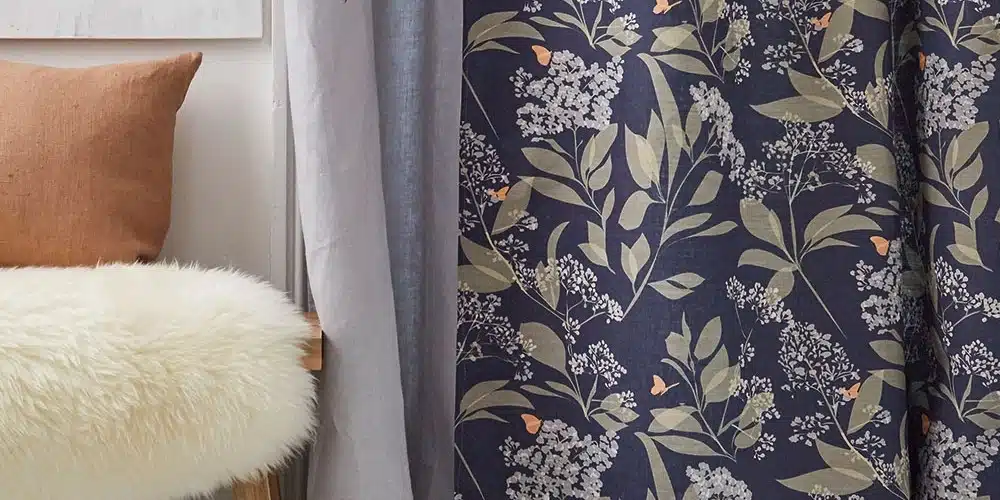
A window can look unfinished, even with beautiful fabric, if the heading doesn’t suit the room. That’s the thing about curtains: the fabric gets the attention, but the heading does the quiet work. If you’ve chosen curtains before and ended up with something that felt too stiff, too skimpy, or just not quite right, you’re in the right place.
This guide is for people who know the basics and want to make better choices. We’ll start by measuring the window and reading the room, then look at why the window should guide your fabric choice, not the other way around.
Before You Choose: Measure the Window and Read the Room
Start with the window, not the swatch. A few measurements and four room questions rule out most wrong turns before you fall for a fabric.
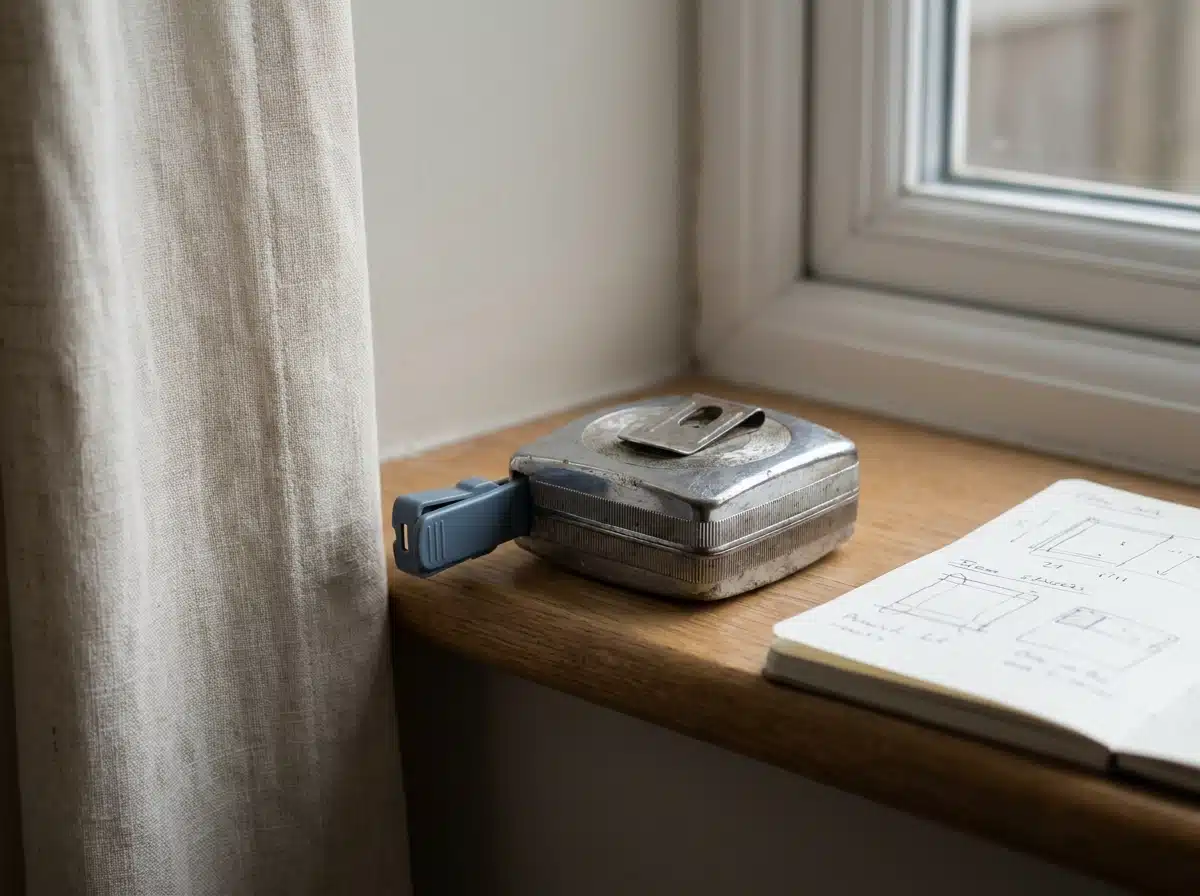
Measure the drop from the fixing, not the glass: from the top of the pole or track, or the top of the recess, to where the hem should finish. Measuring from the glass is the most common reason a curtain hangs wrong. Then measure the width you want covered. Curtains must draw clear of the window when open, so allow for the frame plus stacking room at each side.
Check the return to the wall. Fabric may stack onto wall space, fold into a recess, or sit over a shaped return, which decides how much fullness the heading can carry before it looks crowded.
Read the room before the swatch: ceiling height, a radiator under the sill, furniture close to the window, and how much light you will give up. The same habit guides choosing bird wallpaper for a UK feature wall, where scale, repeat and light do the work.
Decide what the window must do: dress the room, block light, keep heat in, or all three. Around 18% of a home’s heating energy is lost through windows, so well-fitting curtains drawn at dusk make a real difference. That sentence is the brief for your maker, or for you.
Also note the pole or track, fixing type, bracket projection, hand or machine finish, and whether you are buying Lorna Syson fabric to be made up or making it yourself.
Then start with the window.
Start With the Window, Not the Fabric
With your measurements done, let the window decide what comes next.
A bay has three or more planes and shallow returns, so curtains run on a bent track. The heading must travel that curve without binding, and check stack space when open or outer panes stay covered. On a deep bay, returns face a different direction, so vertical designs read differently on each plane. Settle that before panels are cut.
Sash and casement windows are usually face fixed above the frame with little side wall. Slimmer headings keep the stack tidy and let the sash open without catching; confirm clearance between sash top and fixing.
Dormer and sloped ceiling windows leave narrow headroom. Short drops and lighter Lorna Syson fabrics hang better than heavy cloth needing length to fall properly, and pole or track position matters as much as the heading.
Patio, French and bifold doors move, so plan for door swing, sill clearance, handles and walkway past the glass. A fixed, predictable stack copes better than one pushed out of shape.
Tall Georgian and Victorian windows reward Lorna Syson fabric with strong vertical character over a long drop; heavier lining or interlining helps folds hold a clean line. If they catch strong sun, learn how to protect your curtains.
Curtain Heading Styles and What Each One Does for a Room
With the window sorted, the heading does the work. Here is how we think about heading choice in practice:
Pencil pleat is the gathered tape heading: tape depth and gathering set how deep the folds look. Most forgiving across window types, it works on a track or a pole with rings.
Pinch pleat, often three finger, is hand set and stitched for a tailored, formal line. It holds best in a cloth with body and needs extra fabric across the width, so allow for it.
Goblet and other deep single pleats are a statement heading, best in plain or quiet patterned cloth where the fold is the detail, not the design.
Eyelet, or ring top, threads straight onto a pole. It stacks in soft, shallow folds and is easy to hang, but needs pole space at both ends and will not travel a bay.
Tab top is the casual choice: a fixed stack and an informal look for a quiet room or door curtain. Wave heading gives a slim, uniform fold and a clean line on a track, useful where headroom is tight.
Stack space, how much room the open curtains take at each side, is the practical test. Heading settled, choose your fabric for curtains, blinds and upholstery.
Choosing Lorna Syson Fabric for Curtains
Fabric comes last of the three, and it is the most personal choice.
Start with scale. A small bird or floral repeat recedes into pattern across a wide drop; a larger motif becomes a feature you can position deliberately across each panel.
Check the direction. Meadow and wildlife designs have a natural up, so decide whether it runs with the drop or across it and tell your maker before anything is cut.
Match print weight to curtain volume. A quiet pattern lets deep pleats and a formal heading do the work, while a busier all over print holds its own on a simpler heading where more cloth hangs flat.
Think about the whole room. Lorna Syson wallpapers in meadow, bird, floral and wildlife designs sit alongside the fabric range, so the curtain can be specified as part of a scheme rather than added at the end. The same designs carry through commissioned matching fabric and wallpaper.
Ask for repeat size and usable width before finalising quantities; that determines how much fabric a pair needs and where joins land. These are exclusive designer fabrics, not a high street roll.
With repeat and direction confirmed, the fabric can be matched to your heading.
Matching Fabric to Heading to Window
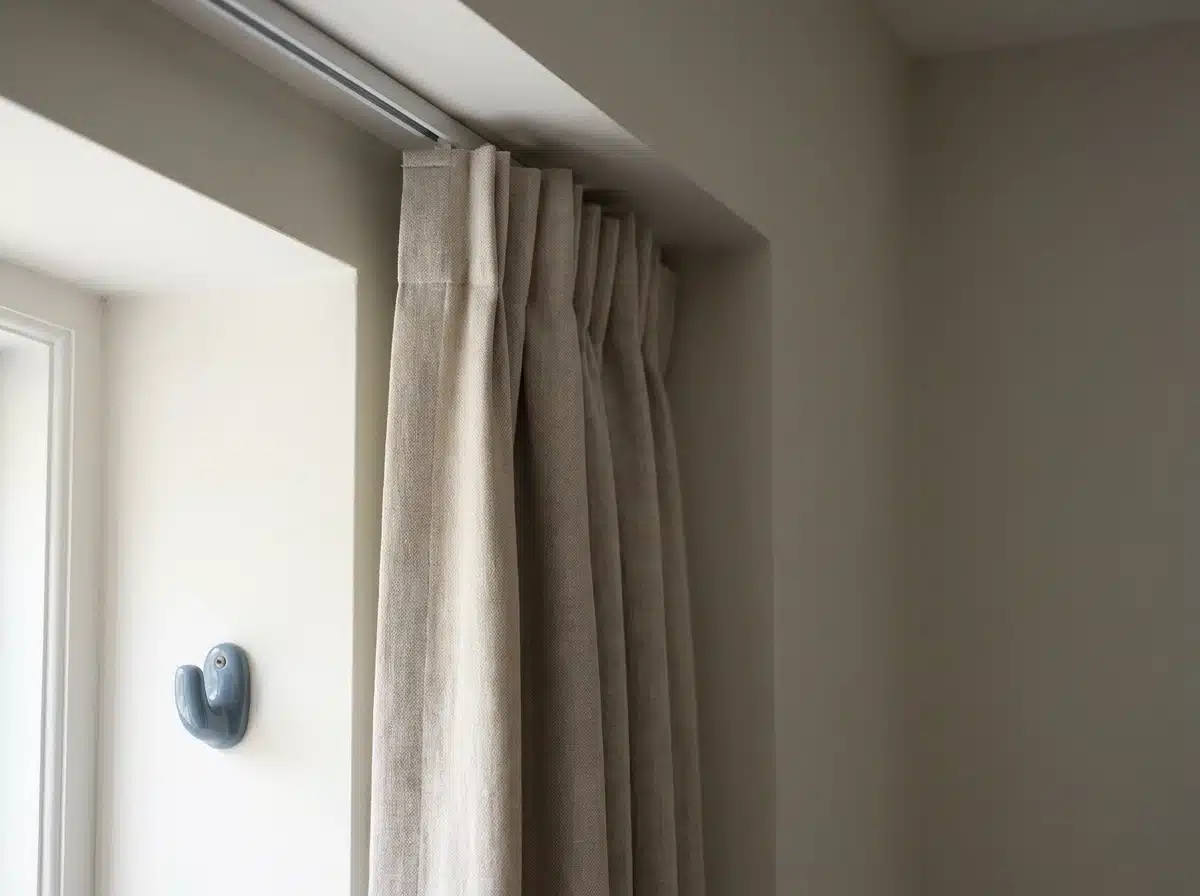
So the fabric is chosen. Now make sure it lands in a window that can carry it. Keep to the same order: window, heading, fabric.
Let the heading answer the window’s problem. A bay needs a heading that travels a curve, a tight recess a slim profile, a long drop pleats deep enough to hold a line to the hem.
Then let the fabric decide the rest. Soft-folding cloth suits a shallower heading; cloth with body holds a deep pleat without collapsing. If a combination fights the window, change one variable, not all three.
Test the awkward pairings honestly. Rule out heavy pleats on a shallow bay with little stack room, and a fixed stack heading on a walked-past door curtain.
Write the trade-off in one line: the stack sits over part of the wall to keep the outer bay panes clear. Knowing the compromise early stops it feeling like a mistake.
Worked Example: A Bay Window in a Period Living Room
Three planes, shaped returns and an often cold room make a bay the fussiest window in the house. Here is that order in practice:
- Constraints: the stack must clear the outer panes when the curtains are drawn open.
- Heading: a track bent to the bay, with pencil pleat or wave, so folds travel the curve without binding and the stack stays predictable at each end.
- Fabric: a Lorna Syson meadow or bird design, with the direction set so the pattern reads consistently across the front plane. The returns face the other way, so agree this before anything is cut.
- Finishing: a heavier lining or interlining gives the long drop a clean line and helps the room hold its heat. Our guide to styling the Goldcrest design for autumn interiors shows how the same pattern settles into a period scheme.
Worked Example: Sash Windows in a Modern Flat
A modern flat’s sash window often leaves little room to manoeuvre. You are usually working with a narrow strip of wall either side, a sash that still needs to slide up and down, and a stack that must sit clear of the glass once the curtains are open.
A pencil pleat on a slim pole keeps the profile tidy above the frame. Where the pole runs wide enough at both ends, eyelet works too, threading straight on and stacking clear of the window. Either way, check the sash clearance before fabric is cut.
Go lighter on fabric here. A Lorna Syson floral or bird design carries the window on pattern alone, so the curtain does not need a deep pleat to look considered.
Finish simply: a plain lining and a hem that hangs clean. A shorter drop shows every wobble, so this is where neatness earns its keep.
Worked Example: Patio or French Doors
French and patio doors ask a different question, because the glass itself moves. Check handle clearance, sill clearance and the walkway past the glass, then plan a fixed stack that will not be shoved out of shape every time someone passes through.
For a curtain opened and closed by hand many times a day, tab top, wave or eyelet headings give that dependable stack. Choose a Lorna Syson design and have both panels cut so the pattern runs continuously across the pair: the window should read as one composition, not two separate curtains.
Finish with a tie back or holdback that keeps fabric clear of handles and the doorway. Test it against where the door actually swings before you fit it, not after.
For the Trade: Repeats, Usable Width and Trade Accounts
The same logic scales up once you are specifying for clients.
Lorna Syson offers trade accounts for interior designers, curtain makers and homeware retailers, so client work can be ordered through a trade route rather than a retail one. If you are weighing up terms, start with what a trade account really covers in the UK.
Before you quote, ask us for the repeat size, the usable width and the direction of the design on the roll. Those three details turn a swatch into an accurate quantity, and they are what clients never see but always notice in a finished pair.
Plan the pattern match across the pair. On a wide window, both panels often need cutting from the same point in the design, so the allowance matters more than instinct.
Wallpaper in matching meadow, bird and floral designs lets you specify the window as part of the whole room, not an item added late.
When you place a trade order, note the intended heading and the drop; a heading note changes what we would suggest.
Small Details That Change How Curtains Hang
Once the order is placed, it is these finishing choices that decide how the finished pair actually behaves.
Lining and interlining change how heavy the curtain feels in the hand and how crisply the pleats hold. Settle that before quantities are worked out, not after.
The hem finish decides whether folds look deliberate or limp. Curtains that flare at the base or curl at the edges usually trace back to the hem.
The return, where the heading fabric turns back to the wall, keeps light and draughts out at the edges. It barely shows, but it separates a finished window from an unfinished one.
Pole diameter, bracket projection and fixing position decide whether the stack covers glass or sits over wall space. Check projection before choosing the heading, because it can rule options out.
Plan tie backs, holdbacks and radiators together. A holdback in the wrong place fights the natural fold line, and a curtain resting on a radiator loses shape at the bottom over time.
Get these right and the curtain hangs as intended.
Your Curtain Checklist and Where to Take It Next
Now the details are sorted, here is the short version to keep.
1. Measure twice. Measure drop from the fixing (not the glass) and width including frame and stack, not just the window opening.
2. Choose the heading by what the window demands. A track that travels a bay, a slim profile in a recess, a dependable stack on doors, pleats deep enough for a long drop.
3. Choose the fabric last, guided by pattern scale and direction, and ask for the repeat size and usable width before you order. Need help calculating your wallpaper? The same maths applies if the scheme carries onto the walls.
4. Specifying for clients? Ask about trade pricing and terms.
5. Join the Lorna Syson newsletter for 10% off your first order.
Start with the window rather than the swatch, and everything else follows.
Conclusion
Matching curtains to a window is less about finding a pretty swatch and more about sequence. Start with the window, let the heading solve its constraints, choose Lorna Syson fabric last, and the rest follows.
Your next step is simple: take the checklist above, measure your window, and explore Lorna Syson fabric with those numbers beside you. Get the order right and the curtain will do exactly what the room needs.