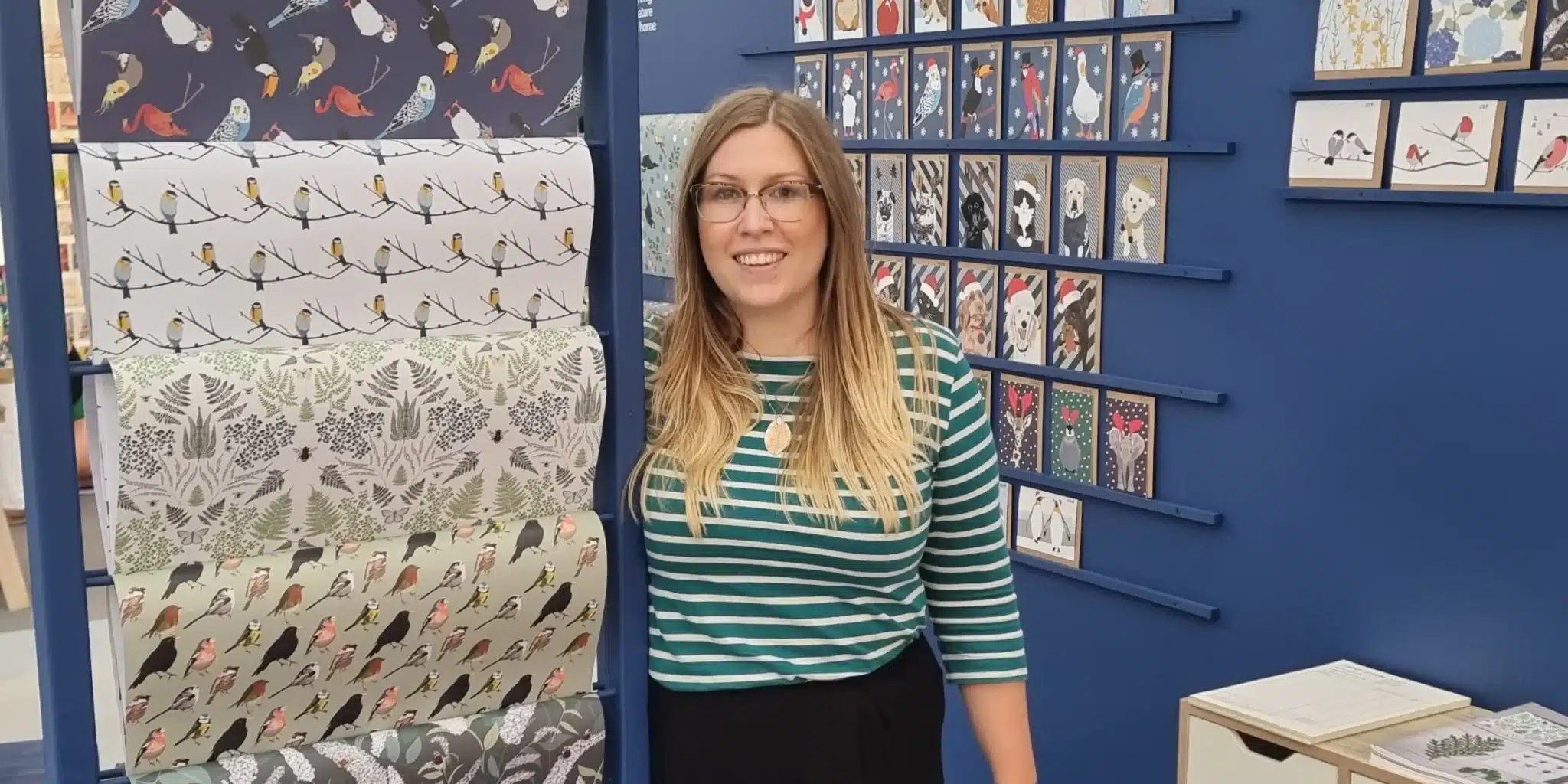
For years, a trade stand was just part of the job. I’d book the space, build the display, and spend the week chatting with interior designers, curtain makers and homeware retailers who stopped by. Then, quietly, I stopped. No dramatic announcement, no falling out with anyone. I just looked at the calendar, the costs and the results, and decided the shows weren’t earning their place anymore.
That decision deserves a proper explanation, so this post is it. I’ll be honest about what exhibiting actually involved, why I stopped, and what the wider picture of UK trade shows looks like from where I sit. Then I’ll tell you where my time goes now, what that means if you buy from me, and what I’d say to anyone weighing up a trade stand of their own.
If you’ve ever stood behind a stand wondering whether it’s worth it, or you’re just curious about what changed, this one’s for you.
Why I’m Writing This Now
I put the news on Instagram first, but a caption is not the place for a decision this big.

This is one designer’s account of a business decision, not a verdict on whether you should exhibit. Every named show, cost and reason in this post comes from me and was checked with me before publishing, with no invented figures.
Shows have shaped this studio since my New Designers and 100% Design days.
Two audiences are reading: trade buyers such as interior designers, curtain makers and homeware retailers, and homeowners who buy my cards, candles and homeware.
I will cover the unglamorous parts too: the costs, the follow-up admin, and what I would have done differently. So let’s start with what exhibiting actually involved.
What Exhibiting at Trade Shows Actually Involved
I exhibited at [SHOWS: insert the real names, confirmed with Lorna before publishing], and each show began months out: designing and printing new samples, ordering wallpaper and fabric headers, packing, and making sure every lead time landed before the doors opened.
Then the cost lines. Stand space, printed collateral, samples, travel. UFI and Oxford Economics count exhibitor travel inside the direct spending exhibitions generate, which for me was the same bill I carried on my own balance sheet.
Show days were physical: standing and talking from opening to close, then emails and follow-up in the evening. Every day on the stand was a day not designing wallpaper, fabrics, cards or candles.
Terms like pricing, samples and lead times are what a trade fabric and wallpaper account in the UK really turns on.
The Honest Reason I Stopped
Three things, honestly: money, time and results.
Money meant stand space, printed collateral, samples and travel, plus the studio days each show swallowed. I’m not quoting a cost per show, because I never tracked one cleanly enough to stand behind.
Time is what juggling summer holidays and owning a small business taught me to count: every day on a stand is a day not designing.
Some orders came in. How many became repeat trade accounts I honestly can’t say, because I didn’t measure it, and I won’t invent a number now.
There was no single tipping moment, just a slow realisation across seven years of growing the business. Those UK exhibition statistics are background only. They describe the whole industry, not one small brand’s return, so they settle nothing either way.

The Bigger Picture of UK Trade Shows
In 2024 the UK hosted 1,145 exhibitions, directly involving around 7.2 million visitors and 132,000 exhibitors, according to UFI and Oxford Economics’ Exhibitions Impact UK report, published in September 2025. That report puts direct spending at £5.1 billion (€6.1 billion), which includes exhibitor travel. It counts the costs of staging shows, not the sales made between exhibitors and visitors.
It also defines exhibitions as events attended mainly by trade visitors, sometimes opened to the public at set times. That is my mix exactly: interior designers, curtain makers and homeware retailers on the trade side, homeowners on the retail side.
These are 2024 figures only, so I cannot say whether attendance or spending is rising or falling. It is also the industry’s own research, and a big sector tells you nothing about what one stand cost one small brand.
Where My Time Goes Now
These days the studio gets my full attention. My designer fabrics and wallpapers, in bird and floral patterns and in meadow, bird, floral and wildlife designs, now reach trade accounts and homeowners directly, with no stand in between.
The paper side keeps me busy too: greetings cards, wrapping papers and weekly planners illustrated with dogs, cats, pets, flowers and birds, plus personalised luxury cards printed on FSC-certified sustainable paper and my modern, quirky Christmas collection. The luxury candles in ceramic pots give retail customers an easier entry point than a wallpaper roll, and commission work has room in the calendar again, including the garden birds pop-up book for Walker Books’ RSPB range and two further illustrated books.
Trade enquiries now happen one to one by email rather than over a counter for three days a year, with fabrics and wallpapers supplied on a trade basis to interior designers, curtain makers and homeware retailers. The newsletter keeps both sets of customers close, and gives 10% off first orders.
What This Means If You Buy From Me
That one-to-one way of working carries through to buying, too.
Interior designers and curtain makers: open a trade account through my supporting interior designers and trade customers page, browse the fabric and wallpaper ranges there, and request a sample before you specify.
Homeware retailers: email me to enquire about stocking. Cards, wrapping paper, planners and candles are the easiest fit for a shop floor.
Homeowners: shop homeware, cards and candles direct, and join the newsletter for 10% off a first order.
Nothing else has changed: same designs, same paper, same studio, just a different route to finding out about them.
If you are weighing up a stand yourself, I have thoughts for you next.
What I’d Tell Anyone Weighing Up a Trade Stand
If you’re weighing up a stand, here’s what I’d say. Add up the true all-in cost first: space, samples, print, travel, and the days you won’t be designing, illustrating or making. Decide what a good result looks like in numbers, then track it. If those orders never became repeat trade accounts, that’s your answer.
Test the direct route first, because it’s where my time goes now: one-to-one enquiries, designs sold straight to trade and retail, and the year-round contact a show only does once. I’ve shared more of that thinking in my 100 Design Takeaway.
If you buy or specify for a living, ask about a trade account and browse the fabrics and wallpapers. If you’re buying for your own home, browse homeware, cards and candles, and join the newsletter for 10% off a first order.
Conclusion
After years of real shows and real stands, I know now that exhibiting was never just the stand fee. It was space, samples, print, travel, and days away from designing, illustrating or making. So add up the true all-in cost, decide what a good result looks like in numbers, and track whether those orders become repeat trade accounts. For me, the direct route works better: one-to-one enquiries, designs sold straight to trade and retail, and year-round contact instead of a once-a-year show.
If you buy or specify for a living, take the next step and ask me about a trade account. Browse the fabrics and wallpapers, and request a sample before you specify. If you’re buying for your own home, shop homeware, cards and candles, and join the newsletter for 10% off a first order. Same designs, same paper, same studio, just a clearer way to reach me.