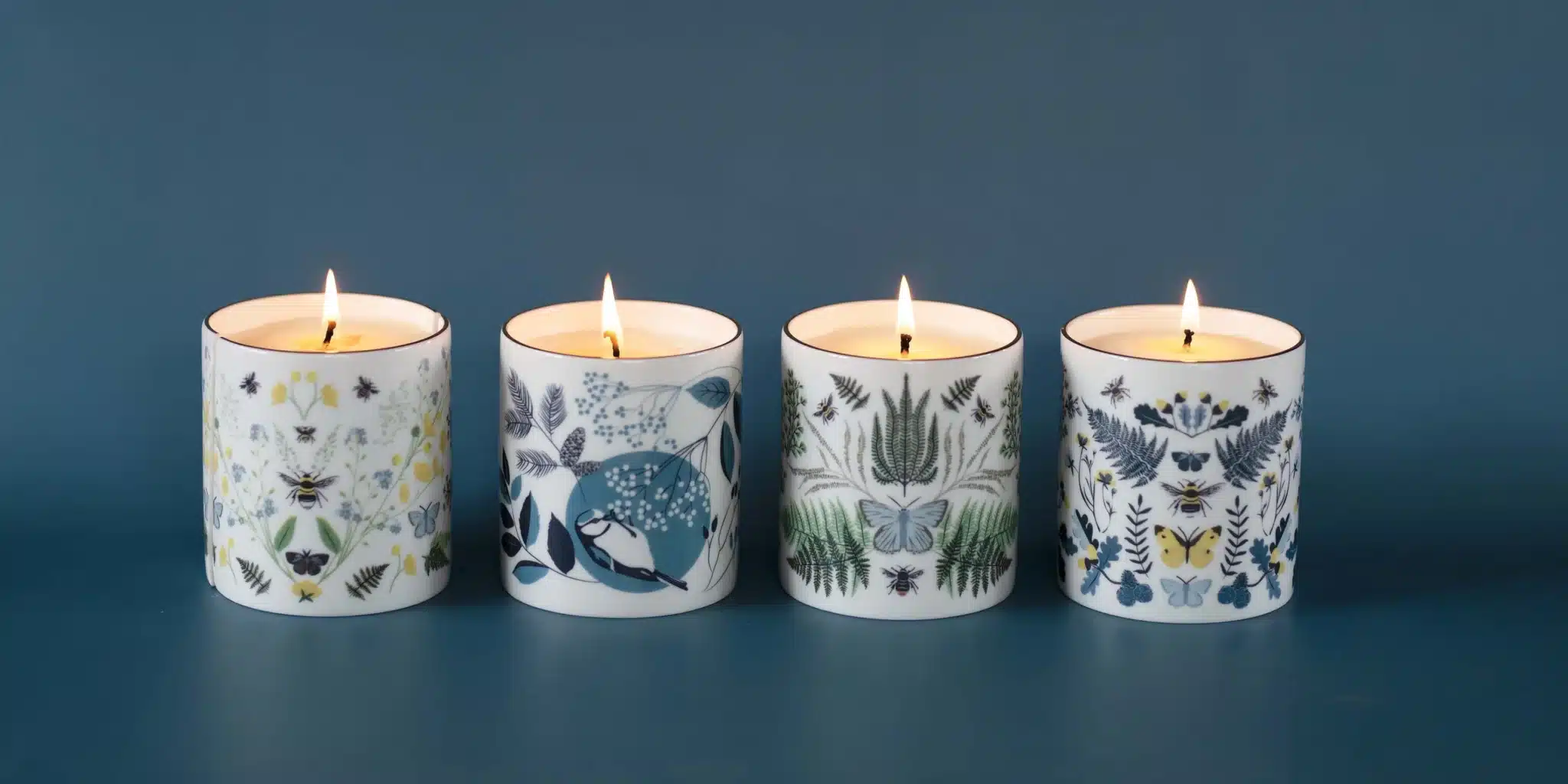
Lorna Syson does candles differently. Her luxury British candle range starts where all of her work starts: with an illustrated surface pattern, the same kind that covers her fabrics and wallpapers. This time it lands on a ceramic pot, made in Stoke-on-Trent, with a scent developed alongside a British fragrance house. The result is a candle where the pot and the pattern read as one unique object, beautiful to look at as well as being a luxury and beautiful smell
In this post, I’ll walk through why I chose to create the luxury candles, how the pattern travels across my home and stationery collections, from fabric to ceramic, what British manufacture adds, and how the scent came together. We’ll look at what the market data says about design-led candles, and how homeowners can match a pot to their interiors or give one as a gift.
Why my candles are unique in the luxury candle market
My designs were the starting point which led to the materials and scents used in the luxury candles. When illustration leads the brief, the ceramic pot, the surface pattern and the scent being matched to each pattern are unique.
Within that market, jar and container candles lead product-type demand; often designs are stickers, or just on the box, decorative appeal and gifting are strong purchase drivers, and I wanted to create something unique, which is precisely why I led with creating the perfect decorative vessel. I worked closely with a ceramist and pottery in Stoke-on-Trent, creating samples and learning so much about decals. My biggest learning was the way the colours can change in the high temperatures. We lost the vibrancy of the reds, which put an end to my test of a robin design on the pot.
From Fabric and Wallpaper to Ceramic: The Design Lineage
Everything starts with a drawing. Birds, florals, meadows and wildlife have been my sketching subjects for years, and those motifs first landed on designer fabrics and matching wallpapers before moving onto the wall itself. Taking them onto ceramic was less of a leap than it sounds, just a different surface to solve for.
In practice, that means translation work. A repeat that reads calmly across a two metre curtain crowds a pot the size of your hand, so motifs get rearranged to complement the space they are to be printed onto. A curved glazed surface also bends an image in ways flat paper never does. And colour shifts: a green that looks soft on woven textile can turn cooler or brighter under glaze and a warm bulb, so the glaze has to be checked in a real room, not on a screen. This change in colours on ceramics informed the colour choices, and helped create this range with the fern designs.
The same drawing hand runs through the full illustrated range: candles, wallpaper, greeting cards and wrapping paper
Made in Stoke-on-Trent: What British Ceramic Manufacture Adds
Stoke-on-Trent, the Potteries, has been the centre of British ceramics for centuries. For customers who want to buy British craft, it’s a win-win and signals a making tradition, not a label.
This means factory to customer is a short journey, batch runs can stay small, and limited editions or seasonal collections don’t carry the volume commitments of imported mass-market vessels, this all means I can deliver something unique for my customers at an affordable price for luxury candles.
Scent Developed Alongside a British Fragrance House
Scent starts with the drawing, not the other way round. A meadow or hedgerow illustration gets a brief that belongs to it, greener and outdoorsy, rather than defaulting to vanilla or sea salt. Names and moods follow the pattern story.
Working with a British fragrance house, we tested lots of samples, looked at different scents from natural to synthetics and made lots of tweaks along the way. We had several sampling rounds and tweaks to the top, heart and base notes before sign-off and the paperwork.
Working with the fragrance house means that Fragrance safety documentation and conformity with industry standards such as IFRA Standards.
The wax is hand-poured vegan soy wax, which gives a clean, all-over burn and carries the scent well into the room. To ensure an efficient burn, when you initially light your candle, let it burn for at least 1 hour so you can see a full melt pool on the top of the candle before you blow it out. This helps maintain a consistent burn and reduces tunnelling.
For Homes: Matching a Candle to Your Interiors
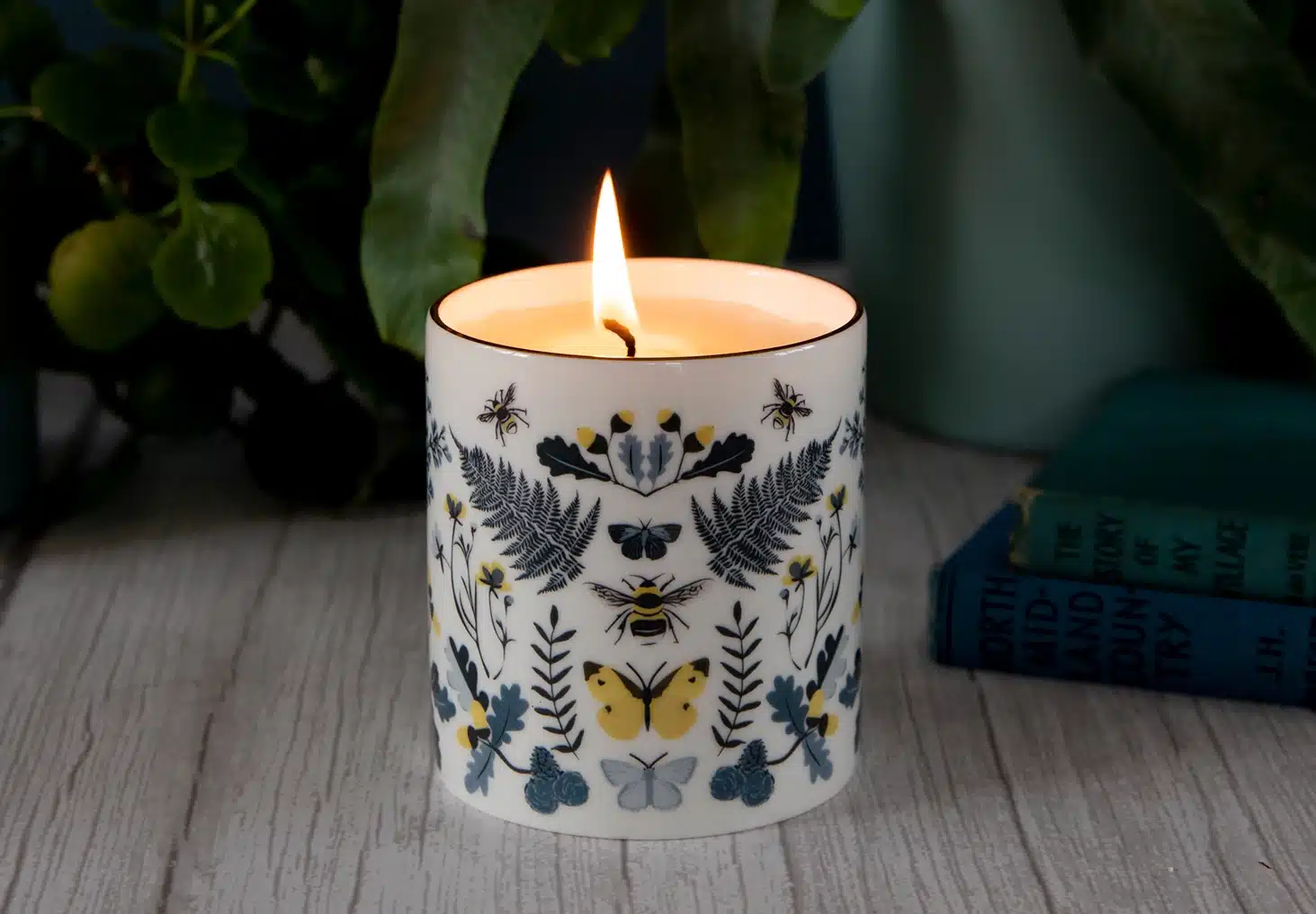
If you’re buying for your own home, there are a couple of designs to choose from; each scent has its own design. Choose the scent or design; it’s up to you. We’ve got notes on the scents for each candle
Winter Woodland
Frankincense, Amber, Cedar, Patchouli, Vetiver, Myrrh, Labdanum. Warm passion of Christmas, frankincense, warm amber, rock rose, myrrh. Complimented by woods from the Orient, cedar, vetiver, and patchouli.
Wild Fig
Top Notes: Peach, Raspberry, Apricot, Coconut, Fig
Heart Notes: Jasmine, Rose, Violet, Clove, Cinnamon
Base Notes: Cedarwood, Sandalwood, Patchouli, Amber, Vanilla
British Hedgerow
Top Notes: Apple, Raspberry, Gooseberry, Pear
Heart Notes: Jasmine
Base Notes: Brandy Notes
Spiced English Pear
Pear, Apple, Cinnamon, Vanilla
Gifting? A candle paired with one of the brand’s personalised cards feels like one considered present, not two small extras. Housewarmings, hosts and thank-yous all suit it.
Be honest about value. This is a design-led, British-made piece bought for how it looks and how it fits a room. Supermarket price comparisons miss the point entirely.
Finally, the pot can live on after the wax as a keepsake for pens or trinkets, but only once care and reuse guidance is confirmed with the client.
The perfect candle for gifting
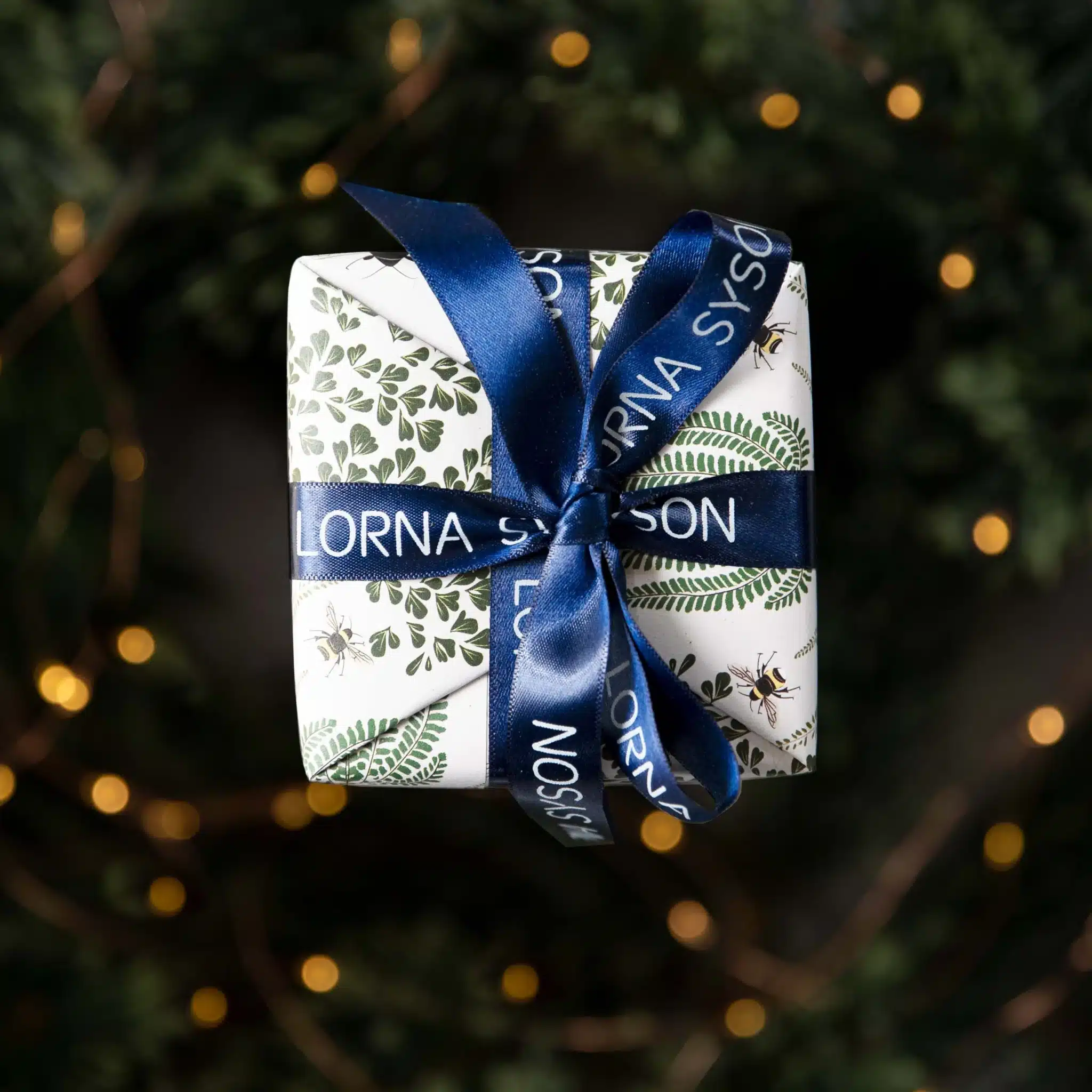
When it comes to gifting, I’ve thought of everything. I know how amazing gifting a candle is, and when you know you’ve gifted something you love, it makes it even more special. I wrap all candles in my fern wrapping paper before they go out, with a ribbon, literally taking away all of your problems