There’s a good chance a robin has already watched you this morning. Maybe from the fence post, maybe from the handle of your spade, cocking its head like it’s sizing you up. Robins are bold, curious, and almost impossible to ignore, which might explain why they keep turning up in Lorna Syson’s work. But there’s a difference between spotting a robin in the garden and capturing one in a surface pattern that still feels alive when it’s printed across a robin cushion or a length of wallpaper.
In this behind-the-scenes case study, we’re opening the studio door to show how a robin design actually takes shape. With over 9.4 million birds counted in RSPB’s Big Garden Birdwatch 2026, it’s clear we’re a nation of birdwatchers. So we’ll trace the process from first observation to finished pattern, starting with why this bird keeps coming back, how the garden becomes a sketchbook, and what repeated looking really records. From there, we’ll cover refining pose and detail, building the repeat, making it work on fabric and wallpaper, carrying the same motif onto cards and planners, and what the garden birds commission taught the studio. By the end, you’ll see why close looking is the brand’s quiet superpower.
Why a Robin Keeps Coming Back in the Studio
The RSPB Big Garden Birdwatch 2026 ran 23 to 25 January, its 47th year. More than 650,000 people counted 9.4 million birds, and the robin sat right in the middle of it: seventh in the UK with 534,032 recorded, down one place. Sightings of robins, starlings and woodpigeons were down on 2025. That is a fall in sightings, not a species in crisis, but it is a reminder to look closely while you can.
That close looking is where this range begins. Every robin fabric print starts with a real robin on a real feeder, watched often enough that its habits become familiar. Nothing is lifted from a stock library.
Over the next few sections I will show you the route: garden observation to sketchbook, sketchbook to repeat, repeat to fabric, wallpaper and cards. Trade buyers, you will get repeat scale and colourways. Homeowners, you will see how a pencil drawing becomes a roll of wallpaper.
The Garden as a Sketchbook
It starts with a habit rather than a project. Same mug of tea, same window, same resident robin at roughly the same time each morning. Over weeks you notice what changes: how the bird sits lower and rounder when it’s cold, how light catches the orange-red breast differently in January than in March.
Then you begin writing down the small things. The quick head tilt before it drops to the ground. The way it shadows a spade or a watering can, hopeful. The short tail flick just before a hop. What goes into the notebook isn’t only the bird, but its relationship to the branch, the feeder, the fence line, and how much clear space it leaves around itself when it perches.
The kit stays deliberately simple: a small sketchbook, a pencil, and thirty second line studies done fast enough to catch movement. Photographs come later, only as an aide memoire. Nothing gets traced.
Planting helps more than any long lens. The RHS names lavender, sunflowers, hawthorn and ivy as bird friendly plants, and a garden like that brings robins close enough to draw from life.
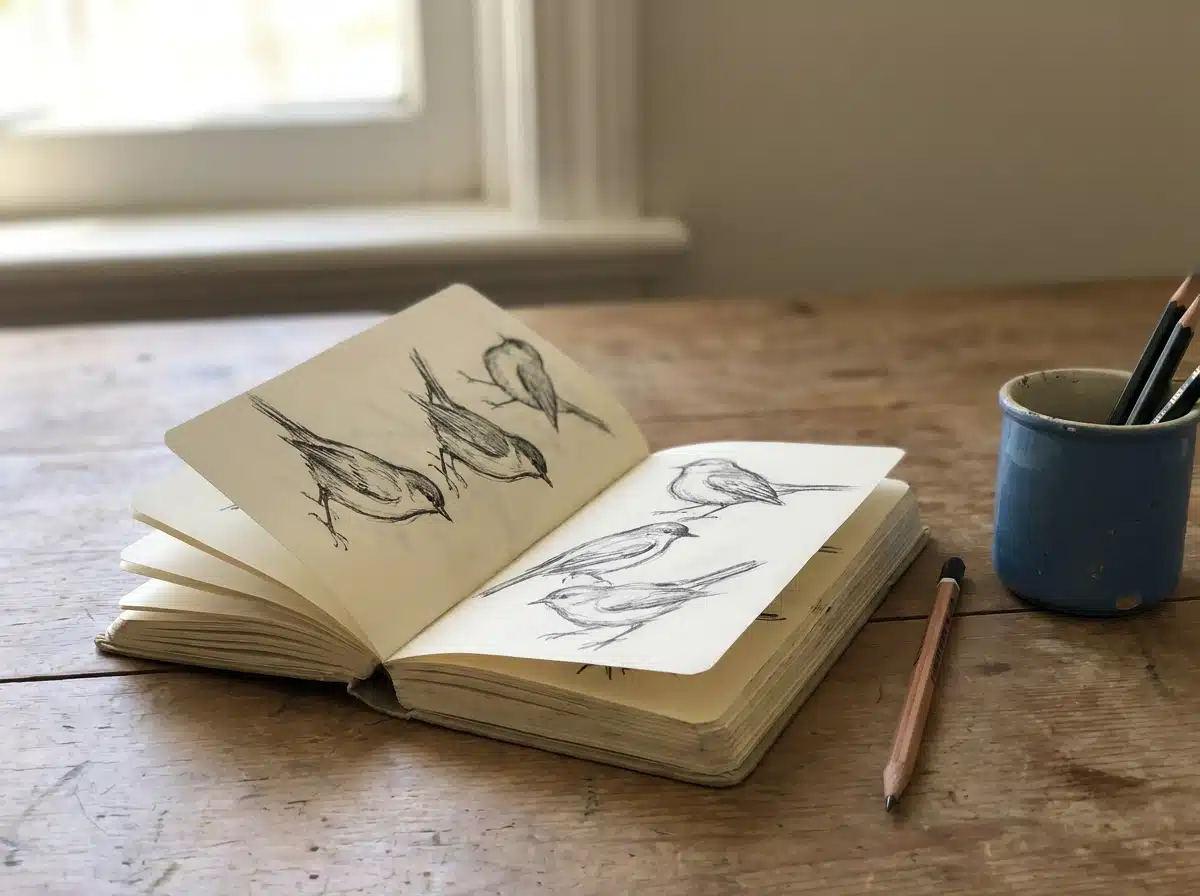
What Repeated Looking Actually Records
Sketch a robin once and you get the idea of a robin. Sketch it twenty times across a winter and you get how this particular robin holds itself, the weight in its legs, the pause before a hop. The details start to separate. The line where the orange red breast meets the grey brown back is never quite clean; the dark eye sits inside a pale ring; the red creeps up the face at its own angle on every bird.
Then the quirks arrive. The same robin lands on the same perch, tilts its head at the same sounds, and carries small asymmetries: a crooked stance, a chest patch heavier on one side. Those irregularities are what stop a drawing looking manufactured.
A photograph freezes one frame and flattens the bird. Watching in real time gives you movement, weight and the pauses between movements. That is where character lives.
So the hour spent watching feels less like a hobby and more like time well used. Robin sightings fell in 2025, and almost half of UK bird species are in decline. Great Britain has lost more than 38 million birds in fifty years.
Refining the Robin: Pose, Detail and Simplification
Soon the sketchbook pages pile up, and the real work begins: editing. From dozens of drawings, only a handful survive, the ones that still read as a robin when the lines are stripped back to the bare minimum.
Pose Is a Design Decision
Alert and upright, hunched and round against the cold, caught mid hop with the tail flicking. Each choice redraws the silhouette, and the silhouette is what gets read first. A robin on a curtain has to be recognisable from across a room; the same bird on a greetings card has to work at thumbnail size. Shape carries the weight, detail comes second.
Then colour. The eye-catching red breast sits warm against cooler greys and greens. How many colours a design uses also shapes how it can be printed and produced: fewer keeps screen printing simple, each extra one adds a pass and a cost.
The Fidelity Test
Scale the drawing up to wallpaper size, down to card size, and check it still holds together. A motif that only works at one scale is not yet a pattern.
From One Robin to a Surface Pattern Repeat
Once a pose holds up at both sizes, the real work begins. I pick the strongest studies, redraw the chosen robin cleanly, digitise the line work, build one motif, then set it into a repeat.
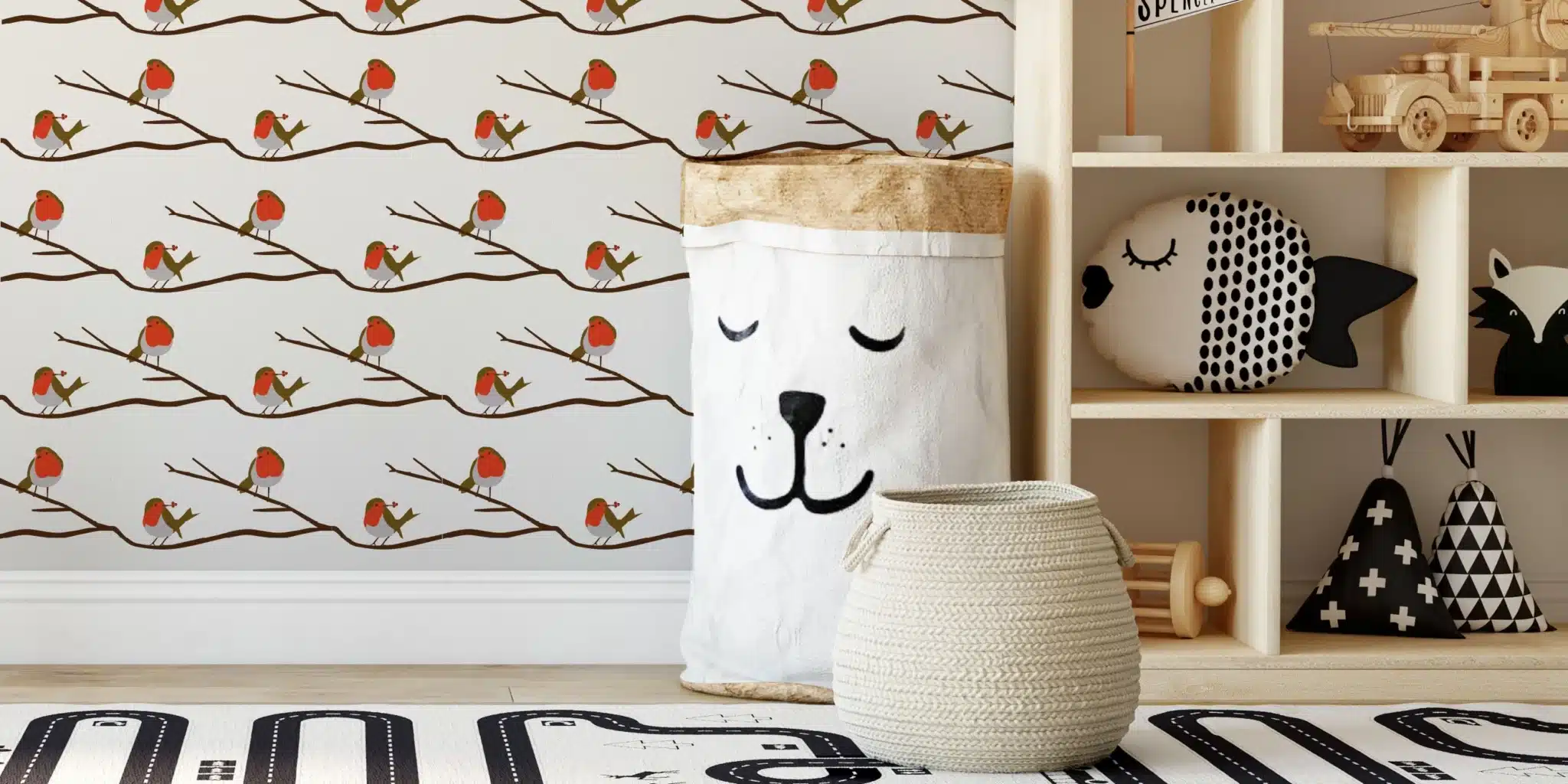
Repeat construction is simpler than it sounds. A block repeat sits the birds in a straightforward grid. A half drop repeat offsets every other row, so the eye never reads a grid. And the way the bird faces steers how your eye travels across the cloth. For the mechanics in more depth, see our guide to what a wallpaper pattern repeat is.
Branches, berries and simple foliage earn their place by giving the robin a perch and creating rhythm. Add too much and the bird stops being the subject.
Then I test it: by eye at real scale, then a printed proof, checking the joins and nudging spacing until the pattern feels calm rather than busy.
One honest note: the exact steps for each robin design sit with Lorna. She needs to confirm which robin designs are in the range and how each repeat was actually built before we publish process detail.
Making the Robin Work on Fabric and Wallpaper
Once the repeat is set, the substrate decides how the robin behaves. Fabric’s weight, drape and weave texture soften edges and shift colour slightly, while wallpaper’s printing method and surface finish change how crisp or soft the same motif reads. So the same bird is planned at more than one scale: a repeat tuned for a curtain panel looks quite different across a full wall.
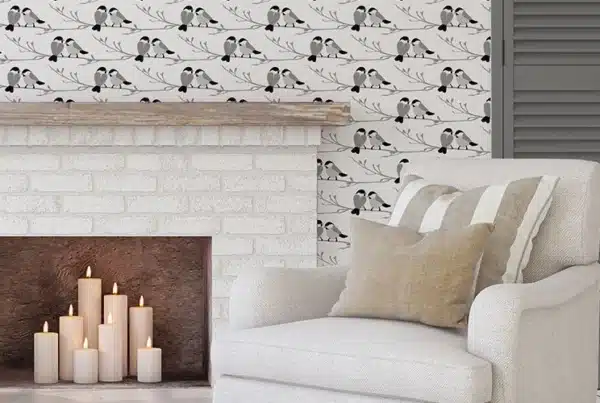
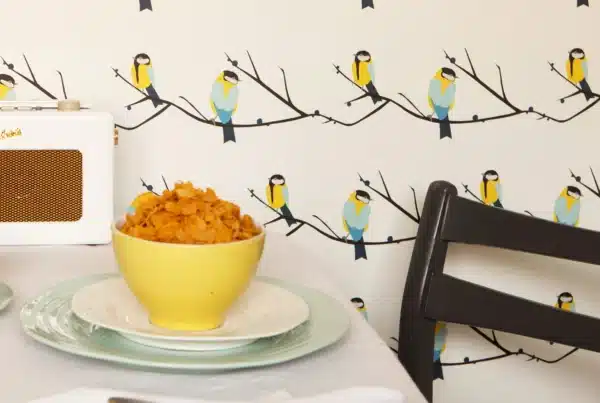
If you’re a curtain maker, check the stated vertical repeat and pattern match on the specification, allow for matching across seams as advised, and order to your own calculations for the drop. Interior designers can carry the same motif across cloth and wall so a room feels considered rather than assembled. Our bespoke fabric designs exist for exactly that kind of coordination, and the range is exclusive designer fabric and wallpaper, available to trade accounts as well as direct customers. Bird and floral designs are meant to sit together as one family, so the robin works happily beside the rest, in a scheme or in handmade wedding decorations made from the same cloth.
The Same Robin on Cards, Wrap and Planners
Once the robin works on cloth and on a wall, cards, wrap and planners give it somewhere smaller to live. The pose usually stays, but the detail around it comes away, so the bird reads instantly on a card front.
Cards are printed on FSC certified sustainable paper and made to be handled, so contrast and line weight matter more than on a wall. A heavier line and a cleaner breast keep the robin sharp in the hand.
Personalisation suits a single bird. A named card, a set for a household, or a robin running across a personalised set all work because one strong motif repeats well. That idea runs through a card for the birthday they are actually celebrating and The Collection: New Baby, Birthday & A Gift for You.
Wrapping paper and weekly planners are where a repeat genuinely earns its keep. The same bird appears many times on one sheet, so any weakness shows immediately. The Birdwatch gives the robin its January moment, while the Christmas card cycle runs well ahead of it. The robin is designed and made long before most people think about it.
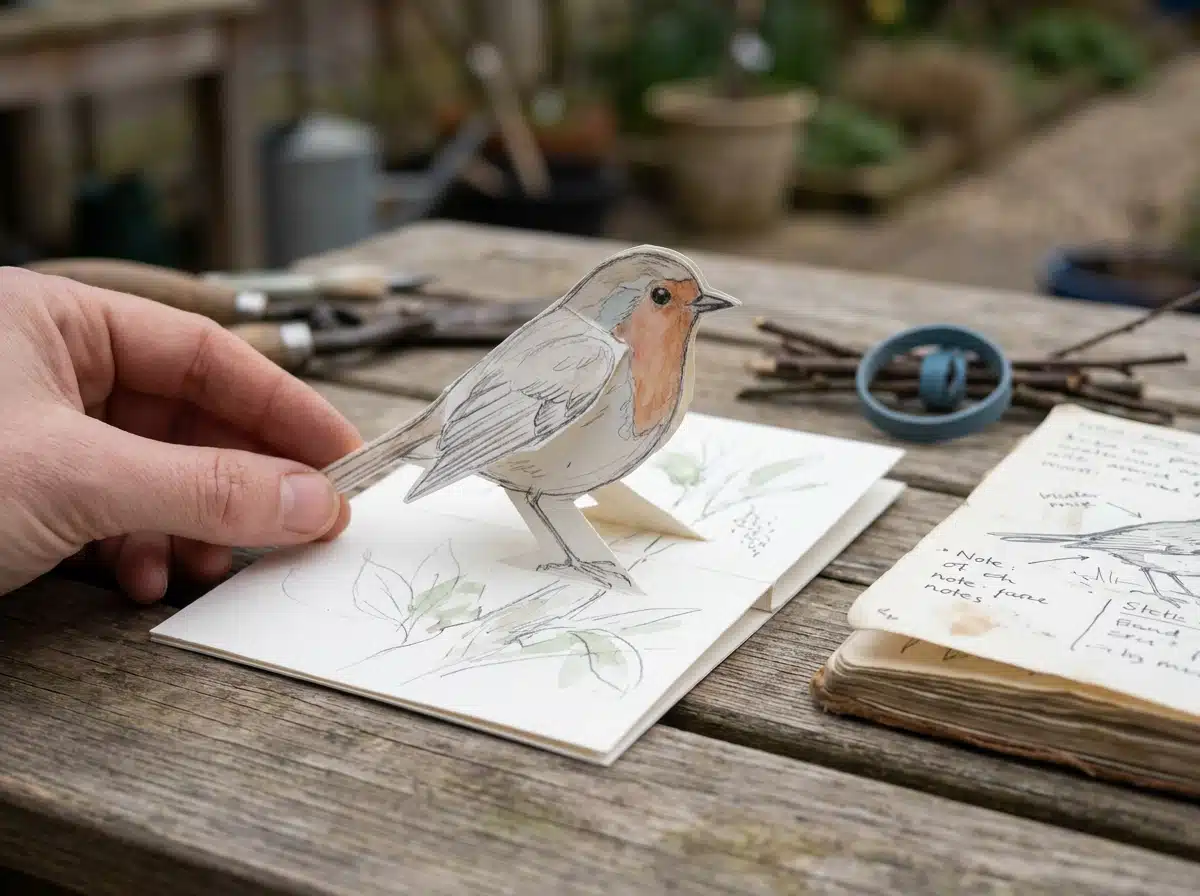
The Garden Birds Commission and What It Taught the Studio
That same discipline travelled further, into a garden birds pop-up book for Walker Books’ RSPB range. The commission is brand stated, so final titles and details need confirming with Lorna before publication. Two further books, Shaken Not Stirred and Boozehounds, show how wide the illustration work ranges.
A pop-up leaves nowhere to hide. The bird’s silhouette must be unmistakable, layers must sit cleanly in paper engineering, and every line must survive being cut and folded.
That discipline fed straight back into the commercial patterns. Simplifying a bird for a fold-out page tightened how the robin behaves in a wallpaper repeat, so the same motif carries across fabric, cards and the new flock cushions.
The RSPB reports more than 38 million birds lost in Great Britain over fifty years, and 70 species added to the Red List in 2021, meaning around one in four species is under serious threat. I would need Lorna to confirm whether the book carries an explicit conservation message before claiming one.
What Close Looking Gives the Brand
That discipline carries straight into the commercial range. Natural and distinctive are not opposites. A robin drawn from life across many sittings ends up more recognisable, not more generic, because it carries the specific habits of a real bird: the head tilt, the pause before the hop, the way it rounds up in cold weather.
Commercially, that matters. A motif rooted in observation holds its character when it moves from fabric to bird wallpaper on a feature wall to cards, which is what lets buyers build a whole scheme around one bird.
You can spot observed bird art fairly quickly. The eye sits where the eye actually sits. The body is slightly asymmetric. The same species appears in more than one posture, not one pose repeated.
Try it yourself. Sit with a feeder for one hour, the way the Big Garden Birdwatch asks, and keep a pencil handy. Notice how much more you see the second time.
If you want to see where that looking leads, the robin designs are in the range, and the newsletter gives ten percent off a first order.
Taking It Further
If you take one thing from this piece, let it be the rhythm behind it: watch the bird, sketch it often, then let the repeat carry the character across products. Nothing in the range shortcuts that order.
For trade buyers
Ask for the repeat scale and colourway details on each robin design before you plan a scheme. With those numbers to hand, curtains, wallpaper and cards can be specified together rather than bought piecemeal.
For homeowners
Look at the range the way the studio does. One robin, three jobs: notice how the same bird softens in cloth, opens up on a wall, and sharpens to a single confident pose on a card.
And if you’d like to follow the next one from the drawing board, join the newsletter for ten percent off a first order. You’ll see each new robin design as it comes out of the studio.
Conclusion
If you take one thing from this journey into the studio, it is the power of close observation. It reminds us that great design isn’t simply drawn; it is distilled from endless looking. We started with a simple garden bird, and through patience, refinement, and the rhythm of repetition, we created a character that lives beautifully across wallpaper, fabric, and card.
This is the value of slow design: seeing how the same bird softens on cloth, opens up on a wall, or stands confident on a greeting card.
So, try to see your own world through a designer’s eye. Look closer. If you are ready to follow the next inspiring design from the drawing board, join the newsletter. You will see each new robin, and every other garden resident, as it comes out of the studio, along with ten percent off your first order.