
How to Work Out How Much Wallpaper You Need When There Is a Pattern Repeat
Buying wallpaper can feel a little daunting, especially when you’re working with a beautiful patterned design. One of the most important things to understand before ordering is the wallpaper pattern repeat.
A pattern repeat is the distance before the design starts again. The larger the repeat, the more wallpaper you may need because some of each length is used to match the pattern with the next strip.
So, how do you work out how much wallpaper you actually need?
What is a wallpaper pattern repeat?
The pattern repeat is the measurement between one point in a wallpaper design and the same point when the pattern repeats.
For example, if a wallpaper has a 52cm pattern repeat, the same part of the design will appear every 52cm.
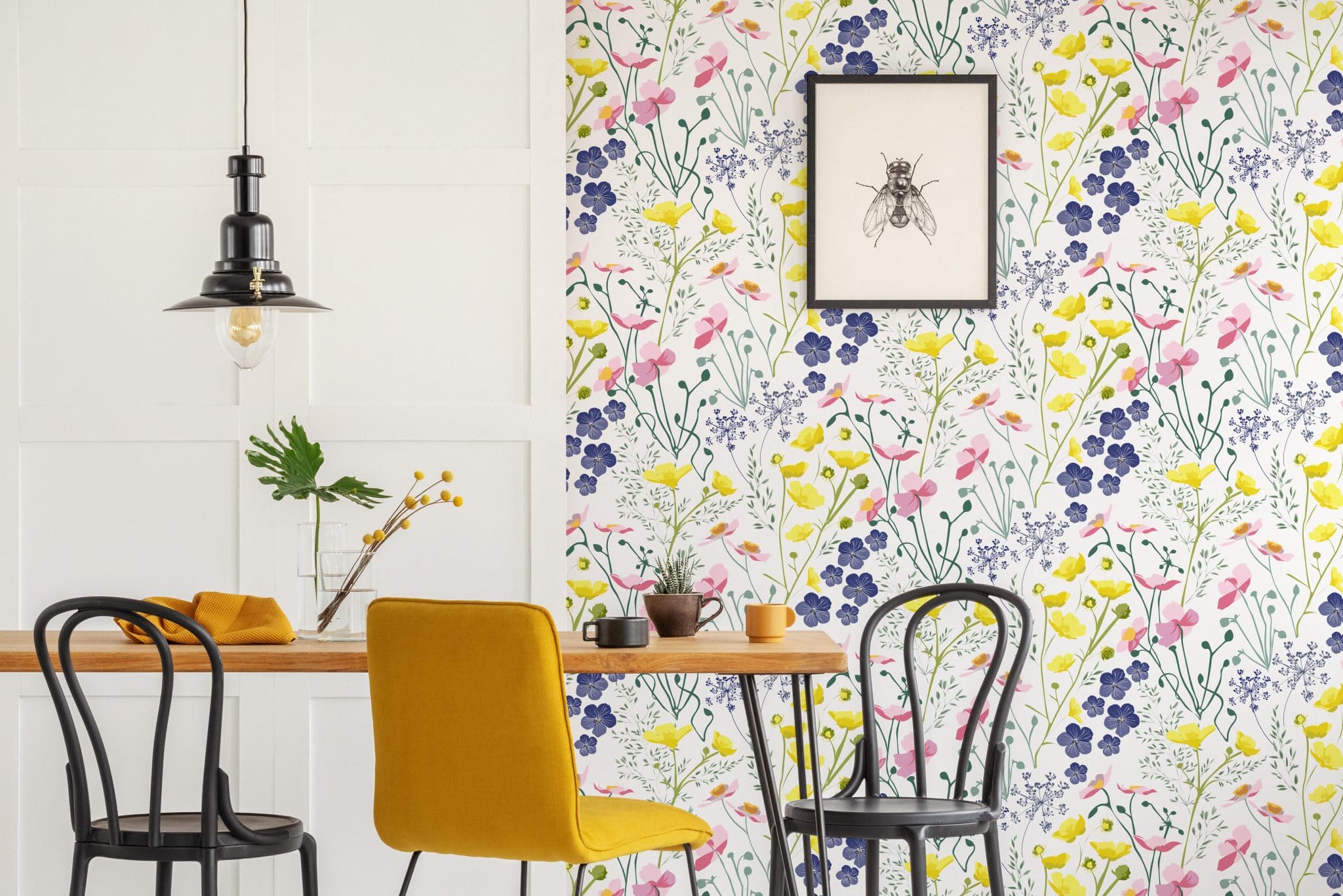
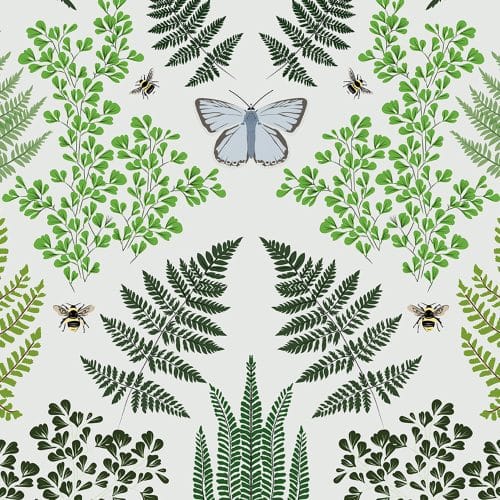
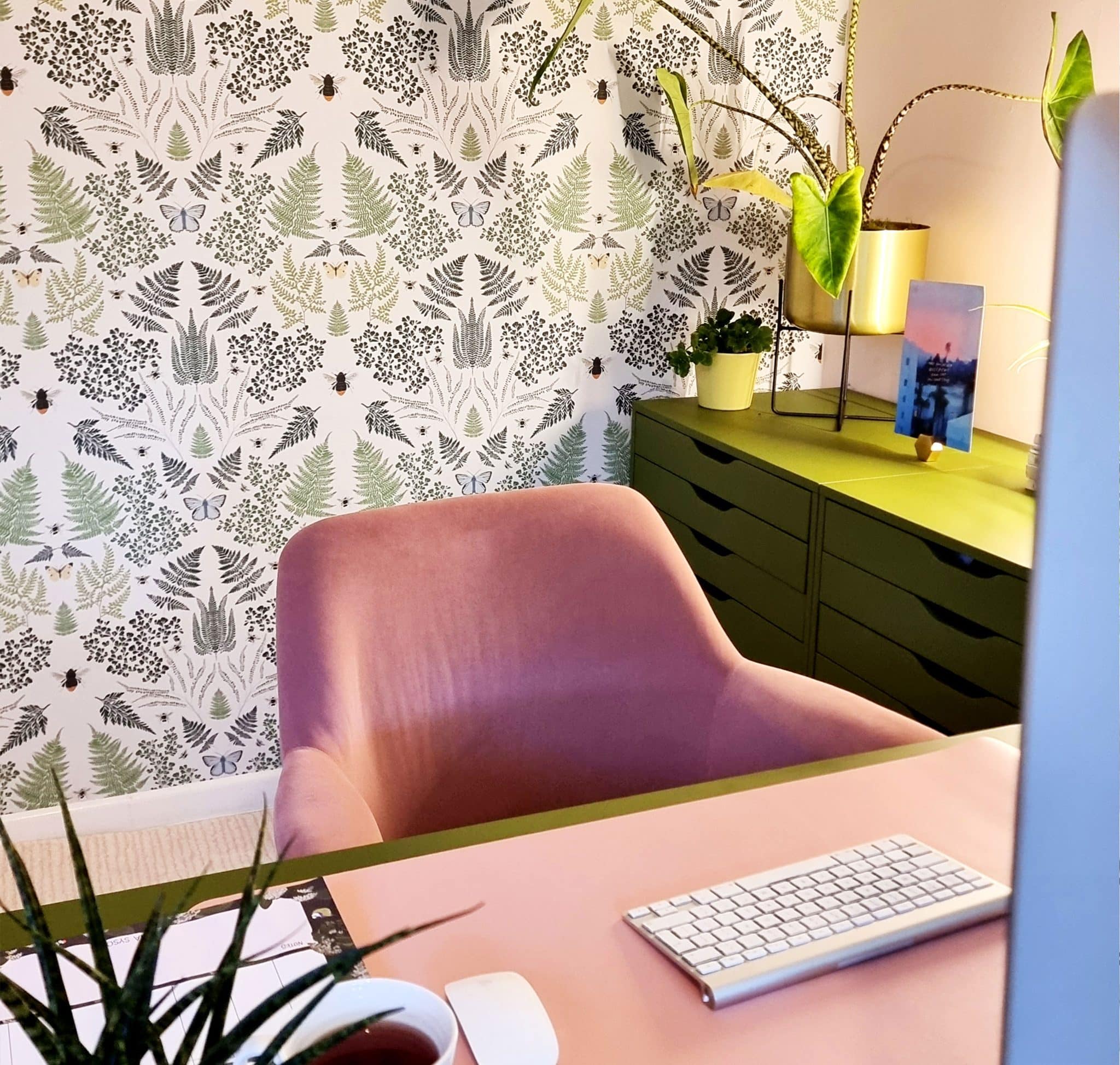
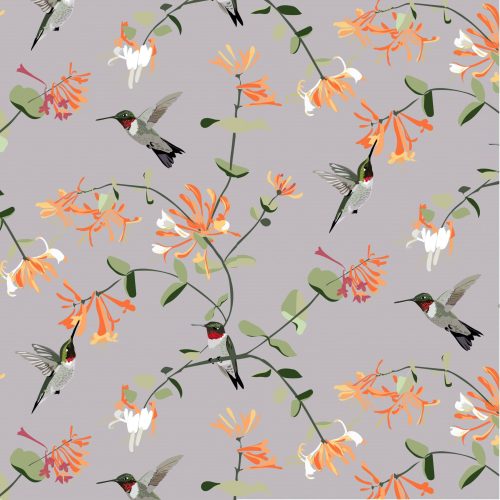
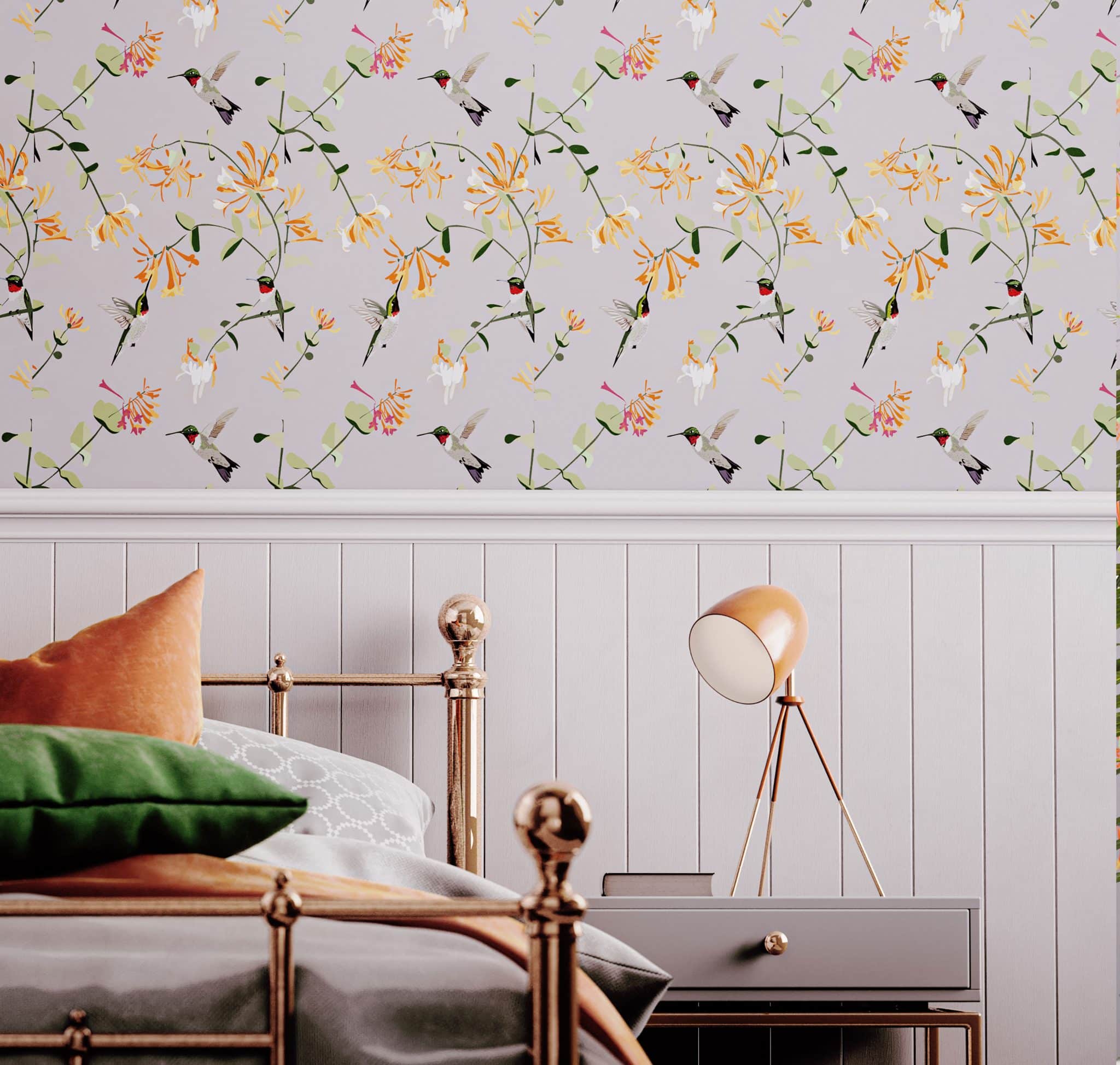
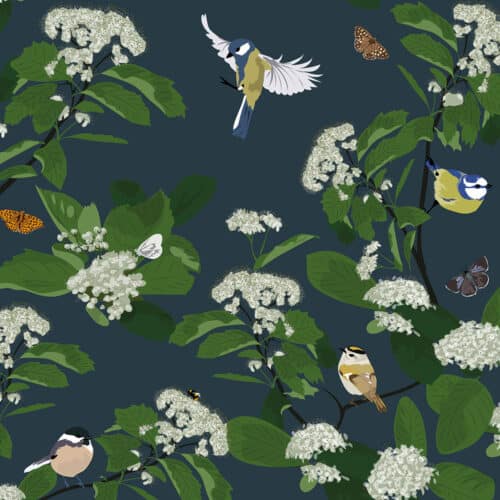
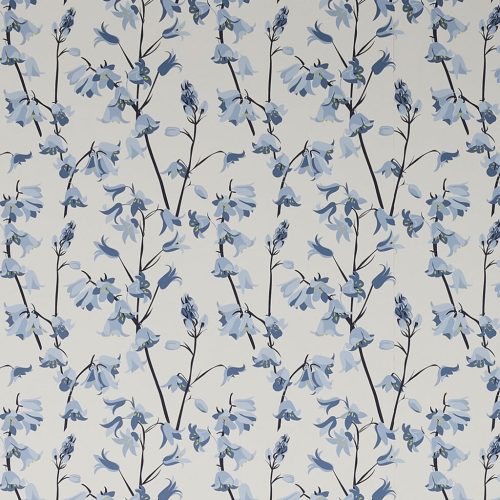
This is particularly important with botanical, floral and illustrated wallpapers, where you need to line up the design between each strip.
Wallpaper with a small or half-drop repeat may require less paper than a design with a very large repeat, but every patterned wallpaper needs to be calculated slightly differently.
Why does the pattern repeat matter?
Imagine your wall is 240cm high and your wallpaper has a 52cm repeat.
You can’t simply cut every length at exactly 240cm because the pattern needs to line up from one strip to the next.
Instead, you need to allow enough extra wallpaper for the pattern to match.
This can mean that each length needs to be cut at the next suitable point in the pattern repeat.
The larger the repeat, the more potential waste there can be.
-
-
Sale!
-
-
Step 1: Measure the height of your wall
Start by measuring the height of the wall from the top of the skirting board to the ceiling.
Don’t assume that every wall is exactly the same height. Measure in several places, particularly if you’re working in an older property where ceilings and floors may not be perfectly level.
Take the largest measurement.
For example:
Wall height: 240cm
It’s also sensible to allow a little extra at the top and bottom for trimming.
Step 2: Measure the width of your walls
Next, measure the total width of the walls you want to wallpaper.
For example, if you have four walls measuring:
- 300cm
- 300cm
- 250cm
- 250cm
Your total wall width is 1,100cm, or 11 metres.
Step 3: Check the width of the wallpaper
Before calculating how many rolls you need, check the width of your wallpaper.
Wallpaper rolls aren’t all the same width, so this is an important part of the calculation.
All of my wallpapers are 52cm wide, apart from the Watlington wallpaper, which is 70cm wide.
For example, if your wallpaper is 52cm wide, you can calculate approximately how many strips you’ll need across your walls.
11 metres ÷ 0.52 metres = approximately 21.2 strips
You would therefore need 22 strips.
Step 4: Allow for the pattern repeat
Now comes the important bit!
Look at the pattern repeat stated on the wallpaper product page.
Let’s say your wallpaper has a 52cm repeat and your wall is 240cm high.
You need to work out how many pattern repeats are required to cover the height of the wall.
240cm ÷ 52cm = 4.62 repeats.
Because you can’t use part of a repeat when matching the pattern, you’ll need to round this up to the next full repeat.
5 × 52cm = 260cm
This means each strip needs to be approximately 260cm long, rather than exactly 240cm.
That extra 20cm per strip is what allows the pattern to match.
Don’t forget doors and windows
You might think you can simply subtract the area of your windows and doors from the total wall area.
With patterned wallpaper, it isn’t always quite that simple.
You still need enough full-width drops to cover the wall, and the pattern needs to continue around doors and windows.
There will also be some unavoidable waste when cutting around openings.
For this reason, it’s usually better to calculate based on the number of wallpaper drops required, rather than simply calculating the total square metres of wall.
What if your walls are different heights?
If you’re wallpapering several walls and they aren’t the same height, calculate based on the tallest wall.
You don’t want to order enough wallpaper for the shortest wall and then discover that you’re a few centimetres short on the tallest one.
It’s also worth checking whether your ceiling slopes or whether there are any particularly awkward areas.
What about a half-drop pattern?
Some wallpaper designs use a half-drop repeat.
This means that every other strip is offset by half of the pattern repeat.
Half-drop designs can create a beautiful flowing effect, particularly with floral and botanical wallpapers, but they can also result in more cutting waste.
If your wallpaper has a half-drop pattern, make sure you check the manufacturer’s instructions before calculating the quantity you need.
Always order a little extra
My biggest piece of advice?
Don’t order exactly the amount you think you’ll need.
It’s always sensible to have a little extra wallpaper available, particularly if you’re working with a patterned design.
Wallpaper can be damaged during installation, you may make a cutting mistake, or you might need to replace a section of wallpaper in the future.
If you have leftover wallpaper, keep it somewhere safe and dry. You never know when you’ll need it for a future repair.
Need help calculating your wallpaper?
Wallpaper calculations can get complicated when you have large pattern repeats, multiple walls, sloping ceilings, chimney breasts or lots of doors and windows.
If you’re unsure, it’s always worth getting advice before placing your order.
When buying patterned wallpaper, make sure you have the following information to hand:
✓ Wall height
✓ Total wall width
✓ Wallpaper roll width
✓ Pattern repeat
✓ Pattern type – straight match, offset or half drop
✓ Number and size of doors and windows
With these measurements, you can work out how many wallpaper drops you need and allow for the pattern repeat.
A final tip from me
If you’re choosing wallpaper for your home, don’t let the pattern repeat put you off. A beautiful repeating design can completely transform a room, and once you understand how the repeat works, calculating the quantity becomes much easier.
And if you’re ever unsure how much Lorna Syson wallpaper you need, it’s always better to ask before ordering than to discover halfway through decorating that you’ve run short!
Ready to choose your wallpaper? Explore the Lorna Syson collection of British nature-inspired wallpapers, including botanical, bird and foliage designs, and find the perfect pattern for your home.
How do I protect my wallpaper?
We recommend for high-traffic areas or bathrooms cover the wallpaper with a decorator’s varnish, our favourite one is Polyvine dead flat clear
Wallpaper Paste Recommendations
The wallpaper is printed in the UK on high quality non woven paper, and I’m often asked what the best wallpaper paste is for paste the wall wallpapers. Please find my recommendations below
A good quality, PH neutral, solvent-free, fungicide protected, light grade adhesive. Do not use self-mix adhesives.
All purpose and heavy duty paste are not suitable.’
The keyword above is ‘light grade.’ All heavy-grade pastes can be too aggressive for the wallpapers.
The following list is what I would classify as suitable.
| Albany Super smooth |
| Albany Speciality |
| Coles |
| Brian Yates Formula 32 |
| Sanderson Elite |
| Harlequin |
| Little Greene |
| Solvite Paste the wall Ready mixed adhesive |
| Brian Yates Formula 350 |





One Comment